
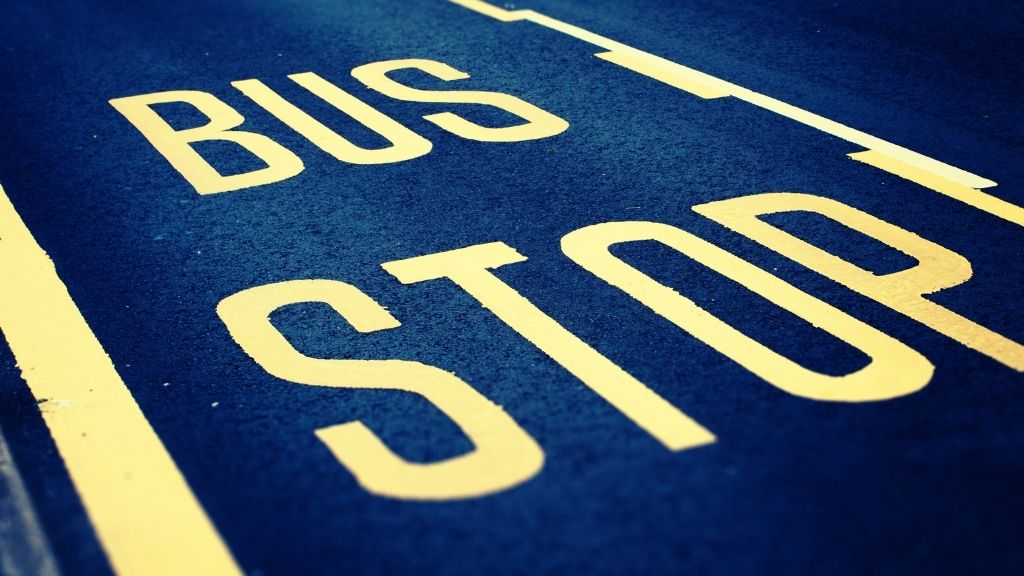
A simple pole and a plate. Can such humble infrastructure form the basis of an integrated network? Are multi-million pound interchanges the only way to unlock the full potential of networks?
Away from the multi-million pound interchanges, the humble bus stop is the backbone of the bus network.
With a simple metal pole and plate a world of opportunity opens up to the user – if the network is designed properly.
Of course not all bus stops are capable of becoming vital nodes within an integrated public transport system. Location, lighting, environment, connections and safety all play a part. For example a lone female is unlikely to want to regularly interchange at a bus stop on a dark industrial estate with a couple of buses an hour in each direction and with no shelter.
But what if that same bus stop gained a shelter, and with it up-to-date clear information, and even better, real-time information boards.
Then what if that same bus stop had bright, clear lighting. Clean, well-maintained surroundings.
Next, what if the bus stop had a bus in each direction of at least every 15 minutes (10 would be even better).
What if the buses served the stop during most of the day so that she didn’t need to worry about the start or finish time of her shifts.
What if the buses that greet her in each direction, were of the highest specification, with the most courteous of driving staff that customer service training can create.
What if the buses actually go where she wants to go with minimal fuss, with seamless affordable ticketing.
That humble bus stop, in the middle of nowhere becomes an exemplar of interchange best practice.
It doesn’t require public control of the buses, but also equally, doesn’t require full on privatisation of the industry.
All it needs is the will of network planners, bus operators and their staff, and local authorities to make it work.
Basic Bus Stop Interchange Checklist
- Up-to-date clear information.
- Clear branding.
- Shelter and lighting.
- Well maintained surroundings including kerb and footpath improvements.
- Regular, punctual departures.
- Connections to useful destinations and interchanges.
- Fully trained driving staff.
- Well maintained, fully featured vehicles.
- Integrated and/or affordable ticketing.
- Real-time information.
Building Better Networks Together
By bringing real world experiences into planning, we can create better bus networks; networks that don’t just meet expectations but exceed them.
So maybe next time you’re working on a new transport project, take the time to really get to know the area and passengers and truly make the difference that we all strive for.
GB
Greater Buses. A better network.
 Greater Buses
Leave a comment