The more time I spend in network planning, the more I realise how many assumptions I once held that no longer serve me. Planning a network that works on paper is one thing. Planning one that works in the real world? That takes a different mindset entirely.
Here are three things I’ve changed my mind about:
Vehicle Requirements Matter More Than I Thought I used to focus on the elegance of a timetable or the simplicity of a route structure. The truth is, it is just a dream if you can’t justify the number of vehicles needed to run it. Resource limits aren’t there to get in the way of our big ideas, they’re a strategic constraint and I’ve learned they need to be respected. You can’t flood a corridor with buses just because it “feels right.” These days, I start with the PVR and frequency in mind, not as an afterthought.
People Will Change Buses I used to believe that asking passengers to change services mid-journey was a non-starter. Too risky. Too annoying. Too unreliable. But in a well-designed, high-frequency network with clear information and short waits, people will make that trade. They just need to feel confident they won’t be stranded. Now I see interchange not as a hindrance, but as a tool to make connections that are otherwise impossible.
The Data Doesn’t Always Match What’s in Your Head There were times I felt sure a certain area would generate strong usage. The roads looked right. The housing looked dense. The routes made sense. But then the numbers told a different story. I’ve learned to listen to the data, even when it contradicts my instincts. And I’ve also learned that not all density is created equal; affluent areas with high housing density don’t always translate to strong ridership.
There are more changes in approach I’ve had over the years, which I’ll cover in future posts, but these three stand out as the ones that reshaped how I approach most network discussions. Planning buses isn’t about drawing lines, it’s about aligning expectations with evidence, and finding a balance between a dream and reality.
Have you had similar shifts in your thinking? Let us know. We’d love to hear them.
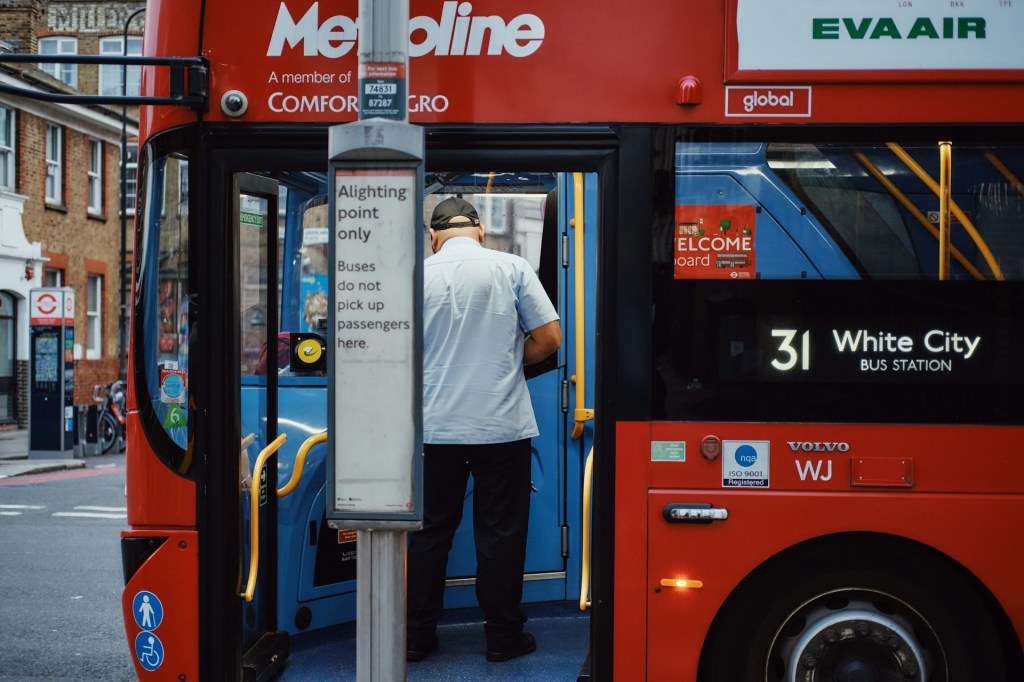
A simple pole and a plate. Can such humble infrastructure form the basis of an integrated network? Are multi-million pound interchanges the only way to unlock the full potential of networks?
Away from the multi-million pound interchanges, the humble bus stop is the backbone of the bus network.
With a simple metal pole and plate a world of opportunity opens up to the user – if the network is designed properly.
Of course not all bus stops are capable of becoming vital nodes within an integrated public transport system. Location, lighting, environment, connections and safety all play a part. For example a lone female is unlikely to want to regularly interchange at a bus stop on a dark industrial estate with a couple of buses an hour in each direction and with no shelter.
But what if that same bus stop gained a shelter, and with it up-to-date clear information, and even better, real-time information boards.
Then what if that same bus stop had bright, clear lighting. Clean, well-maintained surroundings.
Next, what if the bus stop had a bus in each direction of at least every 15 minutes (10 would be even better).
What if the buses served the stop during most of the day so that she didn’t need to worry about the start or finish time of her shifts.
What if the buses that greet her in each direction, were of the highest specification, with the most courteous of driving staff that customer service training can create.
What if the buses actually go where she wants to go with minimal fuss, with seamless affordable ticketing.
That humble bus stop, in the middle of nowhere becomes an exemplar of interchange best practice.
It doesn’t require public control of the buses, but also equally, doesn’t require full on privatisation of the industry.
All it needs is the will of network planners, bus operators and their staff, and local authorities to make it work.
Basic Bus Stop Interchange Checklist
Up-to-date clear information.
Clear branding.
Shelter and lighting.
Well maintained surroundings including kerb and footpath improvements.
Regular, punctual departures.
Connections to useful destinations and interchanges.
Fully trained driving staff.
Well maintained, fully featured vehicles.
Integrated and/or affordable ticketing.
Real-time information.
Building Better Networks Together
By bringing real world experiences into planning, we can create better bus networks; networks that don’t just meet expectations but exceed them.
So maybe next time you’re working on a new transport project, take the time to really get to know the area and passengers and truly make the difference that we all strive for.
In a society that values free choice, should planners dictate how you travel? Whether by foot, bus, train, tram, or even the private car, should the decision be yours alone? Can transport networks be designed to offer genuine choice, or is competition between modes an inevitable battle with winners and losers?
The British are a funny bunch. On the one hand, we’ve built some of the greatest transport systems in the world: London’s Underground, thousands of miles of railway, all moving millions of people every day. Yet, paradoxically, we remain one of the most car-dependent nations on Earth.
The contradictions deepen when you start talking to people about their travel habits. There’s the ritualistic rail commuter, who drives to the station daily but books annual leave at the first whisper of a rail replacement service. Then there’s the savvy student, bouncing between metro and underground systems with ease, their eco-conscious, urban-chic image intact, that’s until the mere thought of boarding a bus shatters the illusion. And, of course, the hard-working backbone of society, for whom the bus is a necessity. Suggest swapping it for a train or tram, and panic immediately sets in as they wonder what a return fare might cost.
Meanwhile, in the world of transport planning, things don’t get any less absurd. Planners, desperate to justify their billion pound projects, often convince transport authorities to withdraw local bus routes, hoping, perhaps naively, that passengers will obediently transfer onto their shiny new system.
And so, the battle lines are drawn. Different transport modes, each with their own strengths, weaknesses, and fiercely loyal passengers. But is this truly a war? Or have we simply built a system where choice is an illusion, dictated by funding, planning priorities, and the whims of decision-makers?
Horses for courses
The old saying, “horses for courses” is an apt phrase for the public transport industry.
Now, I was about to say that you wouldn’t use A for B or D for C, but I didn’t. I’ve stopped myself from making the very same mistake that planners, authorities and politicians make.
Why did you stop yourself I hear you ask? Because I thought of a scenario where a passenger would chose counter to the official narrative.
A man and woman regularly travelled to Manchester by rail. At the time the trains in the North West were abysmal. Overcrowding, cancellations and late running. This unrelated couple decided to abandon the train and came to the bus station to enquire about the National Express coach service. Manchester was one stop away and tickets cost just under a tenner.
Being the helpful member of staff I suggested catching the bus to Manchester, which would save a few quid and they were more frequent.
Now here’s where it gets interesting. They weren’t just looking for an alternative to the train, they were looking for something better. The National Express coach was advertised as 15 minutes faster than the local bus, with no stops. Even though it cost more than the bus and took longer than the train, the certainty of a seat all the way to Manchester made the decision for them.
Their decision wasn’t based on cost or speed in isolation, it was about comfort, predictability, and control over their journey.
Credit: National Express
This raises an important question, do we really give people a choice in how they travel? Or do we expect them to fit into the system, rather than the system fitting around them?
Two sides of the same coin?
This story isn’t unique. Every day, passengers make similar decisions, weighing up speed, cost, comfort, and reliability; sometimes choosing what planners might call the “wrong” option. But is there really a “right” option to begin with?
Public transport often feels like a battlefield, with different modes fighting for dominance. But are they truly in competition, or are they simply different sides of the same coin each fulfilling a different role in a well-balanced network?
As startling as it maybe to some, the train, tram or tube are not necessarily the better choice when compared to the bus.
Trains excel at speed – no bus or coach can match a two-hour journey from Manchester to London.
Trams offer improved journey times and seamless integration between lines.
Underground and metro systems thrive on speed, frequency, and integration.
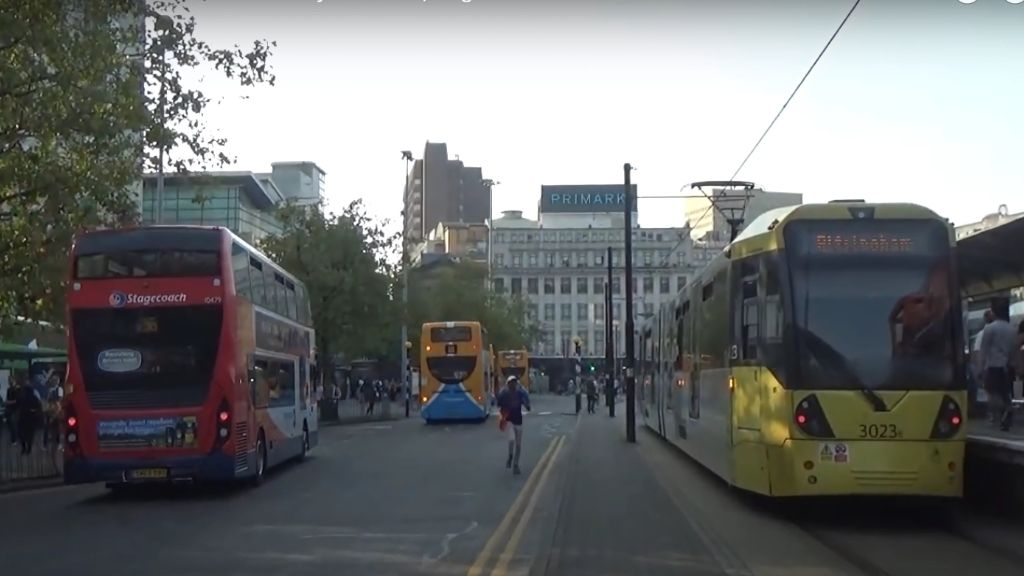
The humble bus, by contrast, rarely competes on these criteria. Except in rare cases, it cannot match the speed or capacity of fixed-track modes. This is where planners and authorities often make a critical miscalculation. With the best of intentions, they withdraw a “competing” bus service when a new tram line is introduced, believing that doing so will encourage higher patronage on the new system. After all, funding decisions are often tied to passenger numbers, so any action that boosts figures, no matter how coercive, can seem justifiable.
This logic isn’t new. In Germany, for many years, buses and coaches were legally restricted from competing with railways. While the UK has mostly avoided such heavy-handed policies, it hasn’t been immune. When Newcastle’s Metro system was introduced, bus services were deliberately restructured to act as feeders. But the expected interchange didn’t materialise, and over time, “normal” bus services were reluctantly reinstated.
Rather than forcing passengers onto a particular mode, buses should be seen as a complement to other modes – offering real choice.
Comfort over speed.
Directness over journey time.
Destinations over interchange.
Choice or control?
So, when two modes go to war, is there really a winner? Or is the real battle not between bus, tram, and train, but between choice and control?
Forcing passengers onto a particular mode doesn’t build a stronger network, it only weakens it. True success isn’t measured by whether a new tram line outperforms the bus route it replaced, but by whether the entire transport system as a whole gives people the flexibility to travel in a way that suits them.
A well-balanced network isn’t about choosing one mode over another. It’s about trueintegration, value to the passenger, and, most importantly, choice.
Because in the end, passengers don’t care about mode wars. They care about getting where they need to be, in the way that works best for them.
Building better networks together
By bringing real world experiences into planning, we can create better bus networks; networks that don’t just meet expectations but exceed them.
So maybe next time you’re working on a new transport project, take the time to really get to know the area and passengers and truly make the difference that we all strive for.



 Greater Buses