Tag: Bus Network Planning

  • Area Analysis: What it really means

    Area Analysis: What it really means

    This post is part of the Area Analysis Series, expanding on the free Strategic Framework PDF.

    If you’ve already downloaded the PDF, you’ll know that Area Analysis is the first stage of network planning. Here, we’re taking a closer look at what that really means. We’re filling out the short notes in the framework with deeper insights and examples.

    Haven’t got the PDF yet? You can download here or subscribe on Substack to get it delivered straight to your inbox.


    The first step

    Area Analysis is the very first step in reviewing or designing a bus network. At this stage, we’re not getting into timetables, stand times, or even vehicles but stepping back and asking: What is the wider environment or context in which this network exists?

    It’s a strategic, high-level look across the whole area. Instead of getting distracted by the detail, you zoom out to see the big picture:

    • The towns and cities that make up the area.
    • The boundaries that define it and the places that lie beyond.
    • The connections that already exist by bus, rail, or road.
    • The destinations of importance: hospitals, industrial estates, retail parks, schools, and more.

    By viewing the area from a higher level than would normally be the case, you can spot insights that might otherwise be missed. Perhaps there’s an industrial estate just beyond the boundary that has no bus link, or a neighbouring town with strong cross-boundary potential.

    This stage is about planting seeds. Ideas and observations that can later grow into full recommendations. Done properly, Area Analysis ensures that a review doesn’t simply follow pre-set strategies or assumptions. Instead, it builds from the ground up, giving a true picture of the operating environment and the needs of the people who live, work, and travel within it.


    This post is part of the Area Analysis Series, expanding on the free Strategic Framework PDF.

    Together, these posts fill out the first stage of the framework, giving you a clearer picture of why Area Analysis matters, what it involves, and how it shapes better networks.

    Haven’t got the free PDF yet? Download it here or subscribe on Substack to get it delivered straight to your inbox.


  • Good Bus Planning – Stand Time

    Good Bus Planning – Stand Time

    Stand time rarely makes it into conversations about bus networks. It’s not flashy and doesn’t get funding headlines. But without it, reliable bus services start to fall apart.

    What is stand time?

    Stand time is the amount of time allowed for a bus to unload passengers and prepare for its next departure. It gives drivers breathing room, allows for unpredictable traffic conditions, and keeps services running to timetable.

    Depending on the type of operation, stand time could just be a couple of minutes, or up to 10–15 minutes. For intense, high-frequency services, or in times of disruption, stand times may become so short that services operate on a “load and go” to keep everything moving.

    Why stand time matters

    Done right, stand time smooths operations and supports reliability. Done wrong, it creates queues of buses circling the bus station, delayed disgruntled passengers, and safety issues on the highway or in bus stations.

    Too little stand time and buses bunch up behind each other. Too much and passengers are sitting idle, lengthening their journeys and reducing frequencies unless more space and resources are added.

    It’s a subtle balance between operational efficiency, physical space, and real passenger experience.

    Stand time in practice

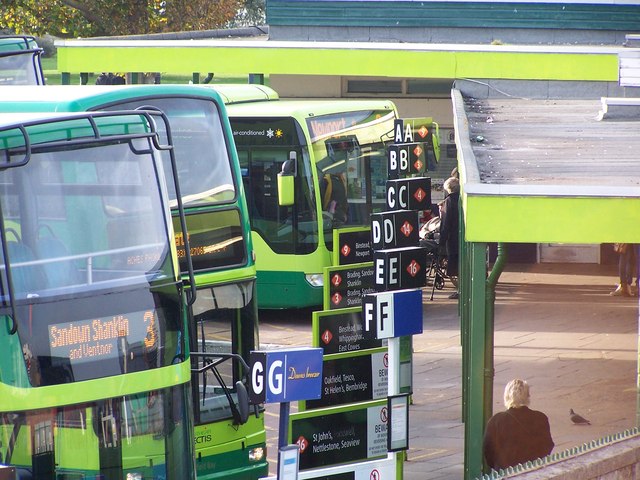
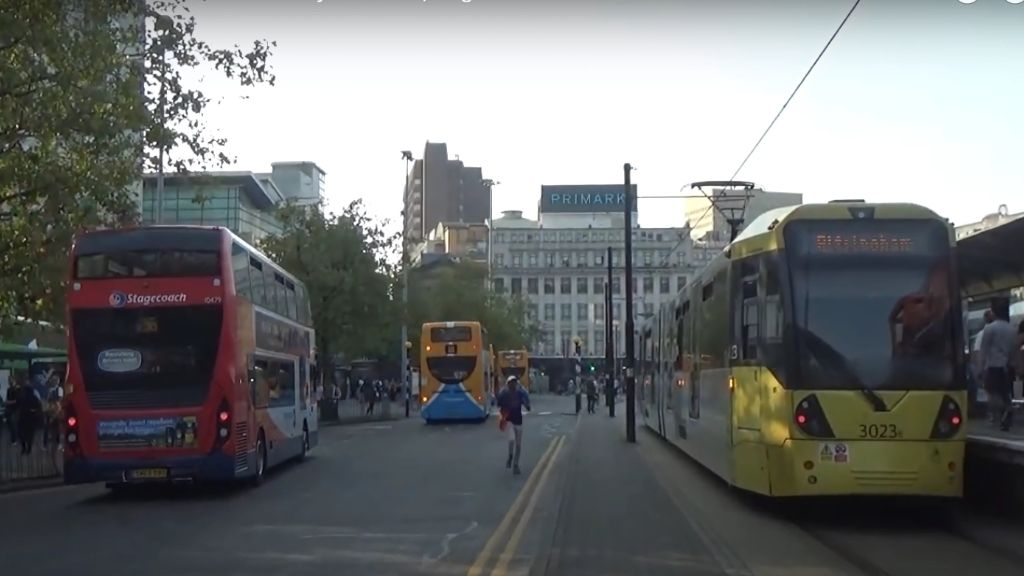
    In busy operating environments such as Manchester or London, it’s impressive to watch tightly timed, high-frequency routes using double or even triple stands, usually with dedicated unloading stands or stops and barely a couple of minutes to turn around. Manchester’s 192 service is one such example.

    In Gothenburg, airport buses use longer stand times – around 10 minutes – to guarantee calm, prepared departures. As soon as one Flygbuss (literally fly bus) leaves, another takes its place. It’s orchestrated and predictable, and it works.

    The passenger perspective

    Most passengers don’t think about stand time, but they definitely feel its effects. A service with well planned and managed stand time tends to feel more reliable and punctual. And when something does goes wrong, as inevitably it will, a few extra minutes built in at the end of the route can mean the difference between recovery and failure.

    Things to consider as a planner

    Infrastructure

    Reversing stands, sawtooth bays, and on-street stops all require different timing.

    Operator behaviour

    With multiple operators, poor stand management can lead to chaos ( think of 1980s Manchester post-deregulation).

    Balance

    Too much stand time reduces efficiency; too little causes knock-on delays.

    The real art of stand time is balance.

    Enough to recover, not so much that it wastes resources. And like many things in bus planning it’s easy to overlook until it breaks.

    In a future post we’ll cover stand graphs to help plot a bus station or stand’s departures.


  • This is not just a bus stop. It’s a gateway to endless destinations

    This is not just a bus stop. It’s a gateway to endless destinations

    A simple pole and a plate. Can such humble infrastructure form the basis of an integrated network? Are multi-million pound interchanges the only way to unlock the full potential of networks?

    Away from the multi-million pound interchanges, the humble bus stop is the backbone of the bus network.

    With a simple metal pole and plate a world of opportunity opens up to the user – if the network is designed properly.

    Of course not all bus stops are capable of becoming vital nodes within an integrated public transport system. Location, lighting, environment, connections and safety all play a part. For example a lone female is unlikely to want to regularly interchange at a bus stop on a dark industrial estate with a couple of buses an hour in each direction and with no shelter.

    But what if that same bus stop gained a shelter, and with it up-to-date clear information, and even better, real-time information boards.

    Then what if that same bus stop had bright, clear lighting. Clean, well-maintained surroundings.

    Next, what if the bus stop had a bus in each direction of at least every 15 minutes (10 would be even better).

    What if the buses served the stop during most of the day so that she didn’t need to worry about the start or finish time of her shifts.

    What if the buses that greet her in each direction, were of the highest specification, with the most courteous of driving staff that customer service training can create.

    What if the buses actually go where she wants to go with minimal fuss, with seamless affordable ticketing.

    That humble bus stop, in the middle of nowhere becomes an exemplar of interchange best practice.

    It doesn’t require public control of the buses, but also equally, doesn’t require full on privatisation of the industry.

    All it needs is the will of network planners, bus operators and their staff, and local authorities to make it work.

    Basic Bus Stop Interchange Checklist

    1. Up-to-date clear information.
    2. Clear branding.
    3. Shelter and lighting.
    4. Well maintained surroundings including kerb and footpath improvements.
    5. Regular, punctual departures.
    6. Connections to useful destinations and interchanges.
    7. Fully trained driving staff.
    8. Well maintained, fully featured vehicles.
    9. Integrated and/or affordable ticketing.
    10. Real-time information.

    Building Better Networks Together

    By bringing real world experiences into planning, we can create better bus networks; networks that don’t just meet expectations but exceed them.

    So maybe next time you’re working on a new transport project, take the time to really get to know the area and passengers and truly make the difference that we all strive for.

    GB

    Greater Buses. A better network.


  • When two modes go to war

    When two modes go to war

    In a society that values free choice, should planners dictate how you travel? Whether by foot, bus, train, tram, or even the private car, should the decision be yours alone? Can transport networks be designed to offer genuine choice, or is competition between modes an inevitable battle with winners and losers?

    The British are a funny bunch. On the one hand, we’ve built some of the greatest transport systems in the world: London’s Underground, thousands of miles of railway, all moving millions of people every day. Yet, paradoxically, we remain one of the most car-dependent nations on Earth.

    The contradictions deepen when you start talking to people about their travel habits. There’s the ritualistic rail commuter, who drives to the station daily but books annual leave at the first whisper of a rail replacement service. Then there’s the savvy student, bouncing between metro and underground systems with ease, their eco-conscious, urban-chic image intact, that’s until the mere thought of boarding a bus shatters the illusion. And, of course, the hard-working backbone of society, for whom the bus is a necessity. Suggest swapping it for a train or tram, and panic immediately sets in as they wonder what a return fare might cost.

    Meanwhile, in the world of transport planning, things don’t get any less absurd. Planners, desperate to justify their billion pound projects, often convince transport authorities to withdraw local bus routes, hoping, perhaps naively, that passengers will obediently transfer onto their shiny new system.

    And so, the battle lines are drawn. Different transport modes, each with their own strengths, weaknesses, and fiercely loyal passengers. But is this truly a war? Or have we simply built a system where choice is an illusion, dictated by funding, planning priorities, and the whims of decision-makers?

    Horses for courses

    The old saying, “horses for courses” is an apt phrase for the public transport industry.

    Now, I was about to say that you wouldn’t use A for B or D for C, but I didn’t. I’ve stopped myself from making the very same mistake that planners, authorities and politicians make.

    Why did you stop yourself I hear you ask? Because I thought of a scenario where a passenger would chose counter to the official narrative.

    A man and woman regularly travelled to Manchester by rail. At the time the trains in the North West were abysmal. Overcrowding, cancellations and late running. This unrelated couple decided to abandon the train and came to the bus station to enquire about the National Express coach service. Manchester was one stop away and tickets cost just under a tenner.

    Being the helpful member of staff I suggested catching the bus to Manchester, which would save a few quid and they were more frequent.

    Now here’s where it gets interesting. They weren’t just looking for an alternative to the train, they were looking for something better. The National Express coach was advertised as 15 minutes faster than the local bus, with no stops. Even though it cost more than the bus and took longer than the train, the certainty of a seat all the way to Manchester made the decision for them.

    Their decision wasn’t based on cost or speed in isolation, it was about comfort, predictability, and control over their journey.

    Credit: National Express

    This raises an important question, do we really give people a choice in how they travel? Or do we expect them to fit into the system, rather than the system fitting around them?

    Two sides of the same coin?

    This story isn’t unique. Every day, passengers make similar decisions, weighing up speed, cost, comfort, and reliability; sometimes choosing what planners might call the “wrong” option. But is there really a “right” option to begin with?

    Public transport often feels like a battlefield, with different modes fighting for dominance. But are they truly in competition, or are they simply different sides of the same coin each fulfilling a different role in a well-balanced network?

    As startling as it maybe to some, the train, tram or tube are not necessarily the better choice when compared to the bus.

    • Trains excel at speed – no bus or coach can match a two-hour journey from Manchester to London.
    • Trams offer improved journey times and seamless integration between lines.
    • Underground and metro systems thrive on speed, frequency, and integration.

    The humble bus, by contrast, rarely competes on these criteria. Except in rare cases, it cannot match the speed or capacity of fixed-track modes. This is where planners and authorities often make a critical miscalculation. With the best of intentions, they withdraw a “competing” bus service when a new tram line is introduced, believing that doing so will encourage higher patronage on the new system. After all, funding decisions are often tied to passenger numbers, so any action that boosts figures, no matter how coercive, can seem justifiable.

    This logic isn’t new. In Germany, for many years, buses and coaches were legally restricted from competing with railways. While the UK has mostly avoided such heavy-handed policies, it hasn’t been immune. When Newcastle’s Metro system was introduced, bus services were deliberately restructured to act as feeders. But the expected interchange didn’t materialise, and over time, “normal” bus services were reluctantly reinstated.

    Rather than forcing passengers onto a particular mode, buses should be seen as a complement to other modes – offering real choice.

    • Comfort over speed.
    • Directness over journey time.
    • Destinations over interchange.

    Choice or control?

    So, when two modes go to war, is there really a winner? Or is the real battle not between bus, tram, and train, but between choice and control?

    Forcing passengers onto a particular mode doesn’t build a stronger network, it only weakens it. True success isn’t measured by whether a new tram line outperforms the bus route it replaced, but by whether the entire transport system as a whole gives people the flexibility to travel in a way that suits them.

    A well-balanced network isn’t about choosing one mode over another. It’s about true integration, value to the passenger, and, most importantly, choice.

    Because in the end, passengers don’t care about mode wars. They care about getting where they need to be, in the way that works best for them.

    Building better networks together

    By bringing real world experiences into planning, we can create better bus networks; networks that don’t just meet expectations but exceed them.

    So maybe next time you’re working on a new transport project, take the time to really get to know the area and passengers and truly make the difference that we all strive for.


  • Transport planners don’t understand buses

    Transport planners don’t understand buses

    Transport planners don’t understand buses. There, I said it. And while that statement might sting, it comes from a place of truth – and a desire to see real change. If I hadn’t seen it with my own eyes I probably wouldn’t have believed it myself.

    I’m not talking about planners who occasionally ride a bus as part of a research project. Or those who hop on for inauguration day, surrounded by dignitaries and perfectly staged service runs. I mean the day-to-day reality of relying on public transport – the frustrations, the delays, the moments when you’re down to your last few quid and praying your contactless payment goes through.

    Disconnect Between Transport Planners and Real-life Buses

    Transport planners and network planners come from very different worlds. On the surface they appear to be aligned but scratch the surface and the differences begin to appear. Network planners often have a practical understanding of the industry, shaped by years of experience as drivers, inspectors, or operational managers. Many have spent a lifetime obsessing over bus routes, timetables, and vehicle types.

    Transport planners, on the other hand, are typically well-versed in theories, concepts, and academic models. They’re taught by professors and advocacy groups who, while well-meaning, often focus on idealistic visions that fail to account for the dynamic realities of running a bus network. Turning a critical economic corridor into a pedestrian paradise might look good on paper, but it doesn’t always help the people who depend on that route to get to work, and therefore aid economic regeneration.

    This isn’t meant to discredit transport planners – it’s a call to action. To truly unlock the potential of bus travel, we need everyone: planners, managers, and operators to immerse themselves in the real-world experiences of passengers.

    3 Steps to Bridge the Gap

    Here’s how we can bridge the gap between theory and operation.

    1. Understand the network from the passenger’s perspective: Move beyond theoretical models and personas.
    2. Immerse yourself in real-world journeys: Ride the buses, talk to passengers, and observe how services operate daily.
    3. Learn from the frontline: Shadow drivers, customer service staff, and operational managers to gain hands-on, real-world insights.

    Building Better Networks Together

    By bringing real world experiences into planning, we can create bus networks that stand the test of time; networks that don’t just meet expectations but exceed them. Collaboration and empathy are the keys to making it happen.

    So maybe next time you’re working on a new transport project, take the time to really get to know the area and passengers and truly make that generational difference that we all strive for.