
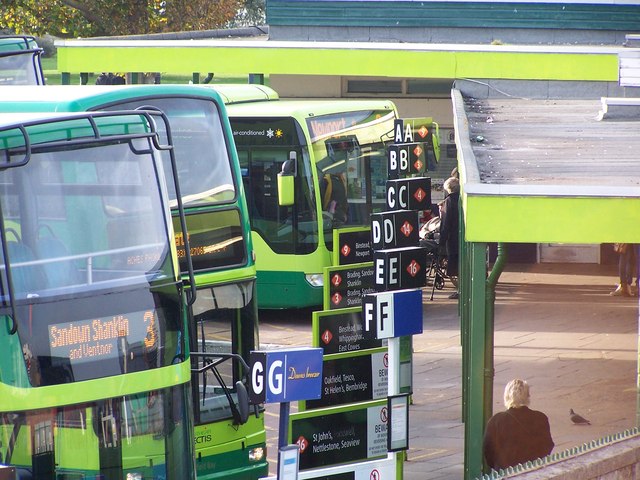
Stand time rarely makes it into conversations about bus networks. It’s not flashy and doesn’t get funding headlines. But without it, reliable bus services start to fall apart.
What is stand time?
Stand time is the amount of time allowed for a bus to unload passengers and prepare for its next departure. It gives drivers breathing room, allows for unpredictable traffic conditions, and keeps services running to timetable.
Depending on the type of operation, stand time could just be a couple of minutes, or up to 10–15 minutes. For intense, high-frequency services, or in times of disruption, stand times may become so short that services operate on a “load and go” to keep everything moving.
Why stand time matters
Done right, stand time smooths operations and supports reliability. Done wrong, it creates queues of buses circling the bus station, delayed disgruntled passengers, and safety issues on the highway or in bus stations.
Too little stand time and buses bunch up behind each other. Too much and passengers are sitting idle, lengthening their journeys and reducing frequencies unless more space and resources are added.
It’s a subtle balance between operational efficiency, physical space, and real passenger experience.
Stand time in practice
In busy operating environments such as Manchester or London, it’s impressive to watch tightly timed, high-frequency routes using double or even triple stands, usually with dedicated unloading stands or stops and barely a couple of minutes to turn around. Manchester’s 192 service is one such example.
In Gothenburg, airport buses use longer stand times – around 10 minutes – to guarantee calm, prepared departures. As soon as one Flygbuss (literally fly bus) leaves, another takes its place. It’s orchestrated and predictable, and it works.
The passenger perspective
Most passengers don’t think about stand time, but they definitely feel its effects. A service with well planned and managed stand time tends to feel more reliable and punctual. And when something does goes wrong, as inevitably it will, a few extra minutes built in at the end of the route can mean the difference between recovery and failure.
Things to consider as a planner
Infrastructure
Reversing stands, sawtooth bays, and on-street stops all require different timing.
Operator behaviour
With multiple operators, poor stand management can lead to chaos ( think of 1980s Manchester post-deregulation).
Balance
Too much stand time reduces efficiency; too little causes knock-on delays.
The real art of stand time is balance.
Enough to recover, not so much that it wastes resources. And like many things in bus planning it’s easy to overlook until it breaks.
In a future post we’ll cover stand graphs to help plot a bus station or stand’s departures.
 Greater Buses