
In most other industries and markets, there is usually a clear definition of who the competitor is, or at least it’s quite obvious. It depends on the market and product line but you can probably rhyme them off: Apple and Microsoft, PlayStation and Xbox, Corsa vs Micra.
The bus, and especially publicly owned buses, the question is not quite so straightforward. Think back to the early deregulated days and a humble bus start up could list all its main rivals. The bus wars of old have receded as the industry consolidates once more. Today, in cases where there are more than one operator on a route, generally there is a lack of enthusiasm for cut throat competition. Not saying it doesn’t still happen, but it’s becoming rarer to witness.
So who or what is the bus industry really competing against?
No, it’s not the car, although things would certainly be smoother without it.
Long ago travelling used to be a lot harder. If you didn’t have a horse you’d be on two feet or on the back of someone’s cart. This limited where you could go and what you could do. Back then travelling for leisure didn’t really exist for the working classes with most travel occurring out of necessity. Then along came the bus, tram and railway under various propulsions. Travelling quickly became something that could be packaged and sold. One-way from town to the factory. Those with money were able to travel more quickly to spas and summer homes. The need to travel started to change and moved from necessity to desirability. People could live just that little bit further from the centre, there were coach and railway trips to the seaside, and the ability to seek work in adjacent towns.
Fuelled by all these new desires and needs, the motorcar came to prominence, opening up the whole country. As the 20th century progressed more and more ordinary families bought their first cars and were able to choose more widely where they went on their much-anticipated holidays and wider choice of shopping and employment destinations.
The ubiquitous nature of moving around by the different modes made travel as a concept into a commodity. All transport modes have contributed to the idea that you can travel whenever you want; wherever you want. Once travel became something that people took for granted, just like we take for granted that you can get a loaf of bread or a bottle of milk from a supermarket, our lifestyle choices shifted to expect that we should be able to do anything we want at any time. With the key word here being do and not travel.
Businesses opening 24-hour factories and warehouses, hospitals and schools being built in the middle of nowhere, retail parks built away from any kind of transport system – including the roads to serve them.
Planners thought the car was the mortal enemy of the industry, until the rise of Uber and the likes. Hackney cabs and private hire had been working within their distinct niches, alongside public transport, but here was a new technology and concept that dramatically shifted the playing field. Uber satisfied that primal need – the ability to travel anywhere, at any time. For the privilege of paying the going demand-responsive rate you can see the vehicle and driver, estimate of the cost, estimated travel time and possibly the most game-changing of all, you could track the vehicle.
The public transport industry has attempted to catch up with vehicle tracking, with real-time information, but it’s not the same. There’s something personal and individual about the app showing “your” car, to “your” destination, from “your” home, and so on.
Initially, some thought the likes of Uber would complement public transport, be that last sore point of the journey between home and the station and back again, and the utopian ideal of everyone ditching their cars for Uber accounts and their local public transport mode of choice. It didn’t happen that way. (Just as it hasn’t happened with walking or cycling). Instead tech-savvy users saw it as their escape from public transport and its confinement. No longer bound by timetables and location constrictions they were finally free to go anywhere, at anytime.
But even Uber isn’t the competitor, although it’s a worthy adversary.
Convenience and instant gratification are fuelling the challenges facing the whole travel industry. Want to watch a film; sit in your home theatre room and watch at your leisure. Ready for your weekly big shop; order a slot on-line at your supermarket of choice. And so on. Whether it be working from home, social media, home bars and saunas, the modern world seems to be obsessed with keeping people at home.
A glimpse of change
The pandemic period was the accelerant for many of the travel industry’s woes, but despite the lifting of restrictions people have not wholly returned to their regular habits. Working in the office for a whole week is now seen as some kind of oppression. There are changes happening. They’re slow but they’re happening. Little trendy micro breweries, independent picture houses, farmers markets and more little pockets rejecting the antisocial behaviours emboldened in the past two decades.
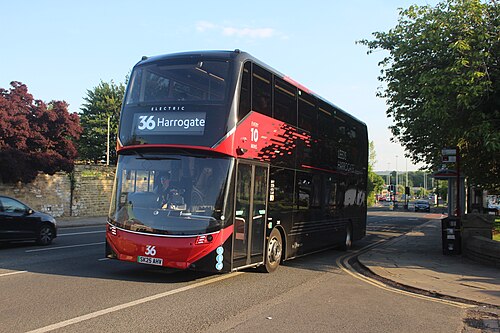
Where the success stories appear are where companies not only understand their markets, but build experiences into the journey and build trust with new and existing users. Transdev’s The Witchway or Route 36 are high profile, high specification examples where style, comfort, experience and trust all come together. There are travellers who willingly use these services in preference to the train, or even the car. That is success driven by the experience.
The companies and routes may not compete directly with online shopping or streaming services, or even working from home, but by considering the whole travel experience they stand a chance at challenging the antisocial blight that has gripped the nation. If you do decide to venture out to Manchester or Leeds, to experience real night life or an event, there’s a luxurious regular double decker that will transport you there. Have friends with you? Nab one of the tables upstairs and have a good natter before you arrive. Even an Uber can’t compete with that.
Kind regards,
JP | Greater Buses
26th May 2026
 Greater Buses